


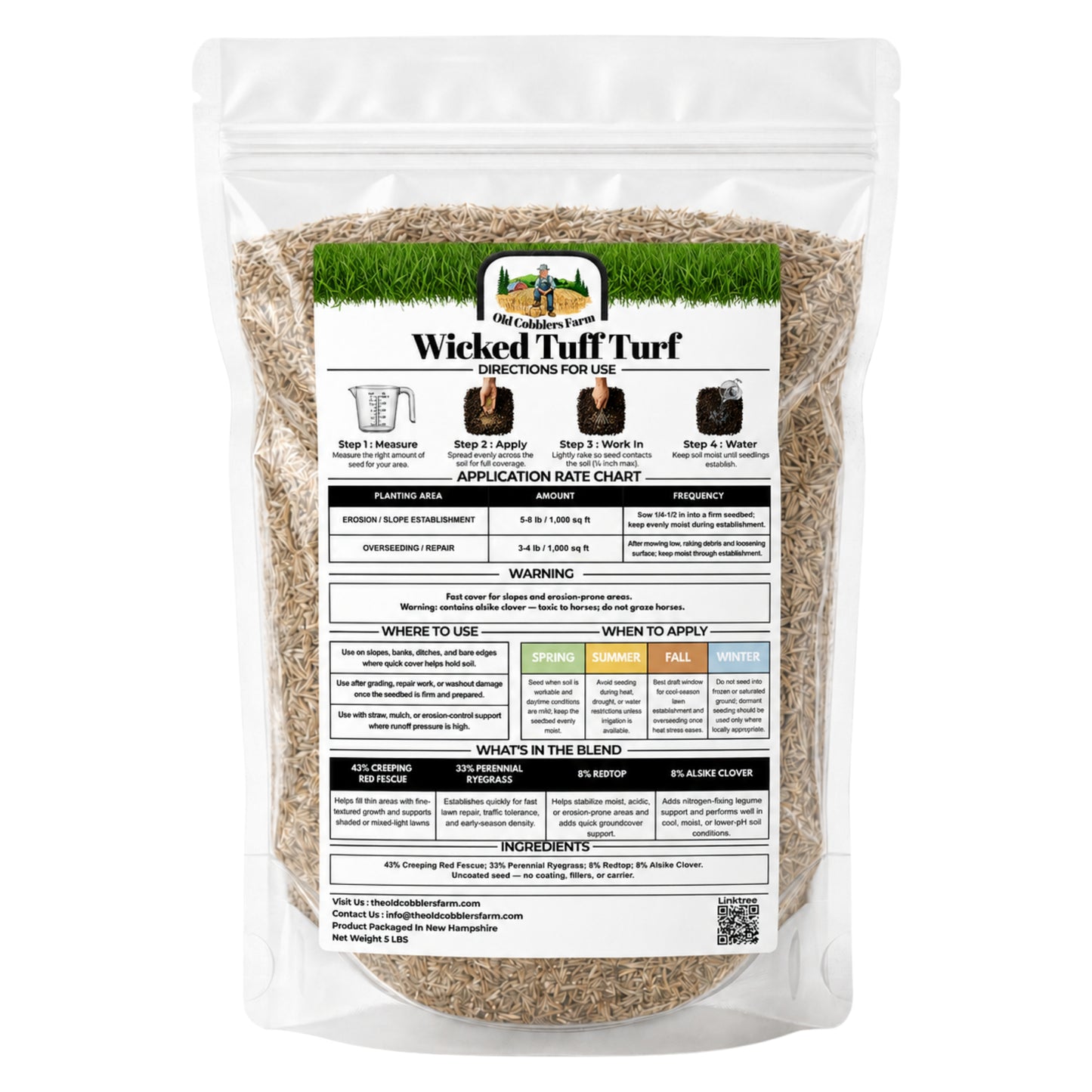


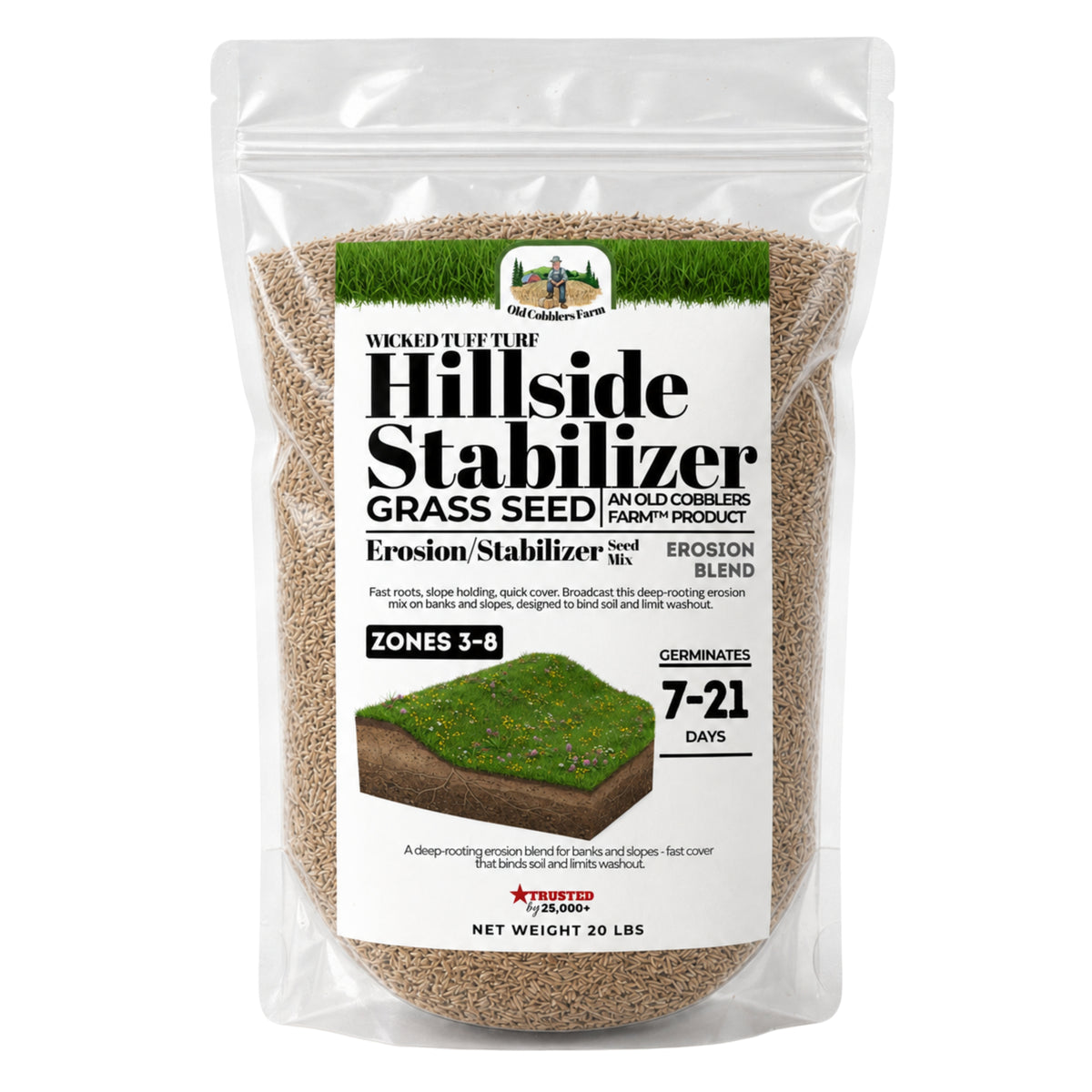
How to Apply
Conditions
-USDA Zones: 3–7
-Sun: 4–6 hours ideal; 3 hours minimum (creeping red fescue adds shade tolerance); legumes need ≥4 hours for nitrogen fixation
-Soil pH: 5.5–7.0; adaptable — selected for clay, compacted, and disturbed ground; tolerates both wet and dry extremes
Seeding Rate
-Standard slopes: 6–8 lb per 1,000 sq ft (≈ 260–350 lb per acre)
-Steep slopes (>30%): 8–10 lb per 1,000 sq ft
-Hydroseeding: 100–150 lb per acre with appropriate mulch/tackifier
Slope Gradient Guidance
-15–30% grade: seed, rake, roll; use an erosion blanket if budget allows
-30–50% grade: erosion blanket strongly recommended; consider hydroseeding
-Over 50% grade: hydroseeding with tackifier required (seed alone will wash away)
-Erosion blankets: install after seeding, staple at 1-ft intervals on slopes over 30%; biodegradable blankets decompose in 12–24 months as vegetation establishes
How to Plant
Loosen the soil surface, broadcast the seed evenly across the slope, and lightly rake or roll for good seed-to-soil contact; water consistently until established. Perennial ryegrass emerges in 5–10 days and Redtop in 7–14 for quick early protection; creeping red fescue and alsike clover follow in 14–21 days; birdsfoot trefoil is slow (21–35 days) but persistent. Established stands need essentially no nitrogen (0–1 lb per 1,000 sq ft a year) thanks to the legumes; a low-nitrogen, high-phosphorus starter at seeding can help initial establishment. The legumes are uncoated (not pre-inoculated) — for best nitrogen fixation use the correct inoculants: Rhizobium trifolii for the clover and a Lotus-type (Mesorhizobium loti) inoculant for the birdsfoot trefoil.
-USDA Zones: 3–7
-Sun: 4–6 hours ideal; 3 hours minimum (creeping red fescue adds shade tolerance); legumes need ≥4 hours for nitrogen fixation
-Soil pH: 5.5–7.0; adaptable — selected for clay, compacted, and disturbed ground; tolerates both wet and dry extremes
Seeding Rate
-Standard slopes: 6–8 lb per 1,000 sq ft (≈ 260–350 lb per acre)
-Steep slopes (>30%): 8–10 lb per 1,000 sq ft
-Hydroseeding: 100–150 lb per acre with appropriate mulch/tackifier
Slope Gradient Guidance
-15–30% grade: seed, rake, roll; use an erosion blanket if budget allows
-30–50% grade: erosion blanket strongly recommended; consider hydroseeding
-Over 50% grade: hydroseeding with tackifier required (seed alone will wash away)
-Erosion blankets: install after seeding, staple at 1-ft intervals on slopes over 30%; biodegradable blankets decompose in 12–24 months as vegetation establishes
How to Plant
Loosen the soil surface, broadcast the seed evenly across the slope, and lightly rake or roll for good seed-to-soil contact; water consistently until established. Perennial ryegrass emerges in 5–10 days and Redtop in 7–14 for quick early protection; creeping red fescue and alsike clover follow in 14–21 days; birdsfoot trefoil is slow (21–35 days) but persistent. Established stands need essentially no nitrogen (0–1 lb per 1,000 sq ft a year) thanks to the legumes; a low-nitrogen, high-phosphorus starter at seeding can help initial establishment. The legumes are uncoated (not pre-inoculated) — for best nitrogen fixation use the correct inoculants: Rhizobium trifolii for the clover and a Lotus-type (Mesorhizobium loti) inoculant for the birdsfoot trefoil.
