




How to Apply
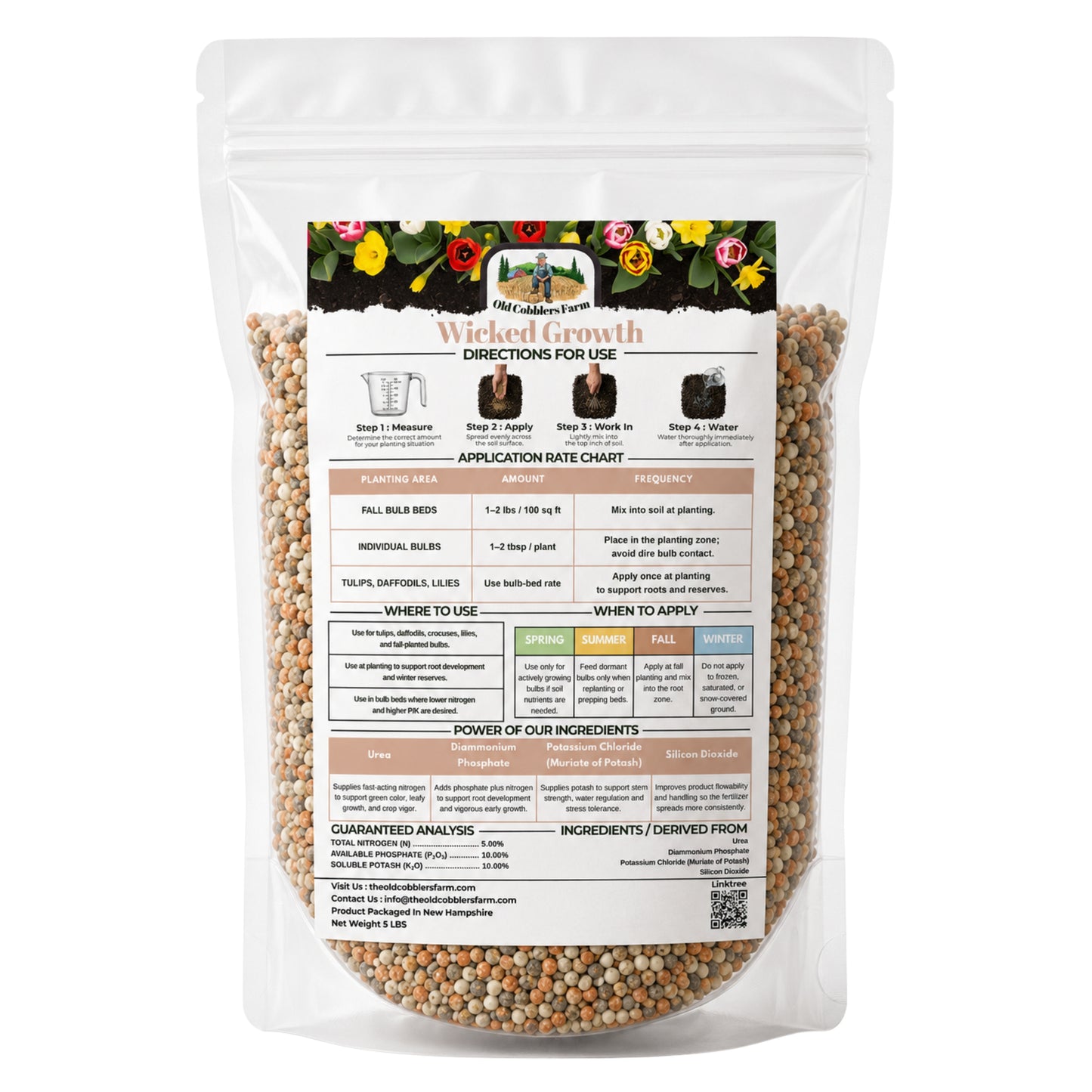
-New bulb plantings: 1–2 lbs per 100 sq ft, mixed into the soil before planting
-Established bulbs: 1–2 tablespoons per plant, sprinkled evenly around the base
-Flower beds: spread evenly over the bed and work into the top 3–4 inches of soil before planting
-Containers: mix 1 teaspoon per gallon of soil before planting; reapply every 6 weeks during the growing season
Steps:
1. At fall planting time, measure the rate for your area or container.
2. Mix thoroughly into the soil where the bulbs will sit — phosphorus stays where you put it, so placement matters.
3. Plant the bulbs at their proper depth and backfill.
4. Water thoroughly to settle the soil and start root growth.
When: in fall, at planting — that single well-placed feeding is the foundation. Established beds can be top-dressed at 1–2 tablespoons per plant.
What NOT to do: do not let concentrated fertilizer sit in direct contact with bulb basal plates (mix it through the soil instead), do not exceed the rates, and do not skip the watering-in.
-Established bulbs: 1–2 tablespoons per plant, sprinkled evenly around the base
-Flower beds: spread evenly over the bed and work into the top 3–4 inches of soil before planting
-Containers: mix 1 teaspoon per gallon of soil before planting; reapply every 6 weeks during the growing season
Steps:
1. At fall planting time, measure the rate for your area or container.
2. Mix thoroughly into the soil where the bulbs will sit — phosphorus stays where you put it, so placement matters.
3. Plant the bulbs at their proper depth and backfill.
4. Water thoroughly to settle the soil and start root growth.
When: in fall, at planting — that single well-placed feeding is the foundation. Established beds can be top-dressed at 1–2 tablespoons per plant.
What NOT to do: do not let concentrated fertilizer sit in direct contact with bulb basal plates (mix it through the soil instead), do not exceed the rates, and do not skip the watering-in.
