




How to Apply
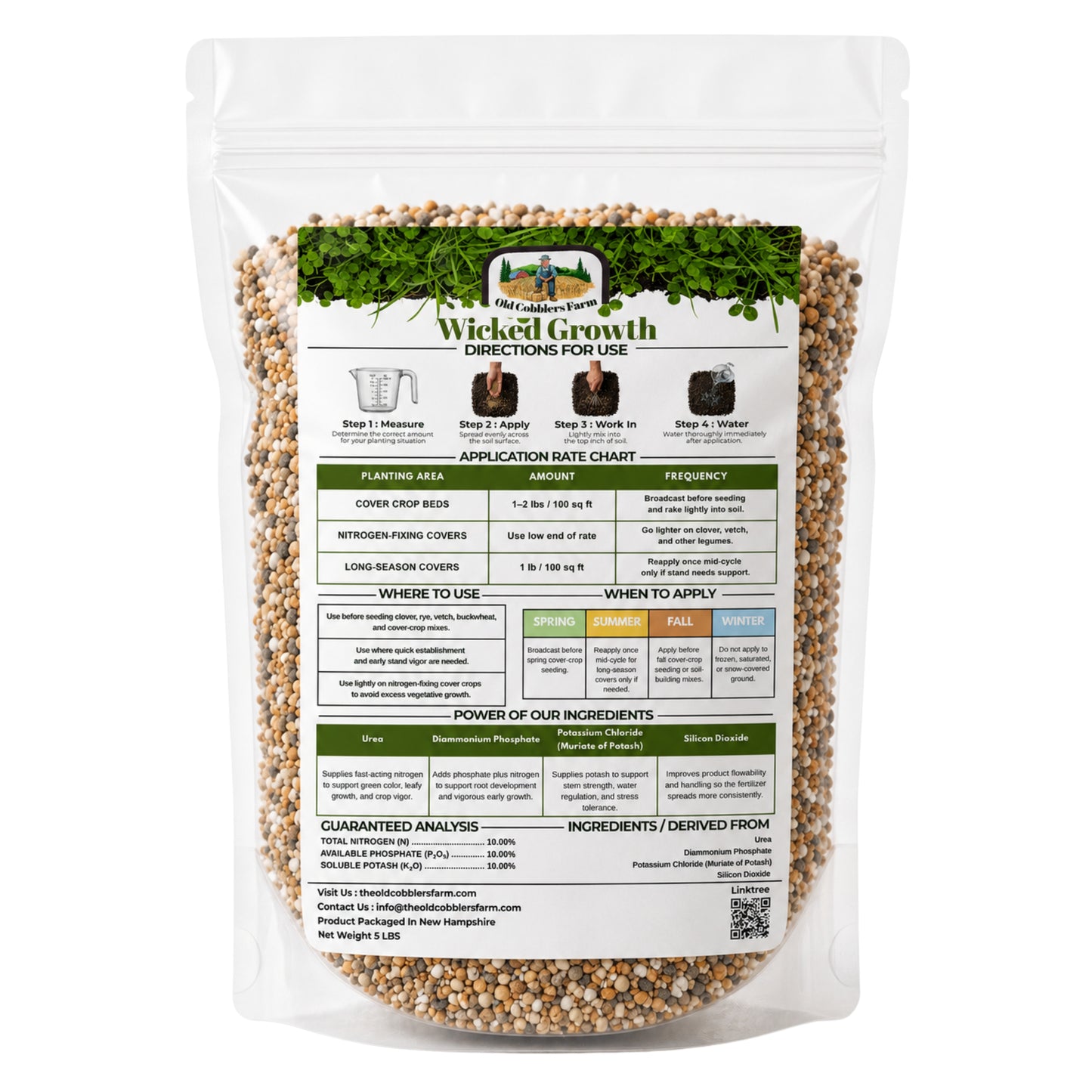
-Before seeding: broadcast 1–2 lbs per 100 sq ft and lightly incorporate into the topsoil
-Established stands: side-dress or top-dress 1 lb per 100 sq ft once plants are 3–4 inches tall
-Nitrogen-fixing covers (clover, vetch, field peas, alfalfa mixes): use the lower end of the rates — they supply their own nitrogen, and overfeeding reduces that benefit
Steps:
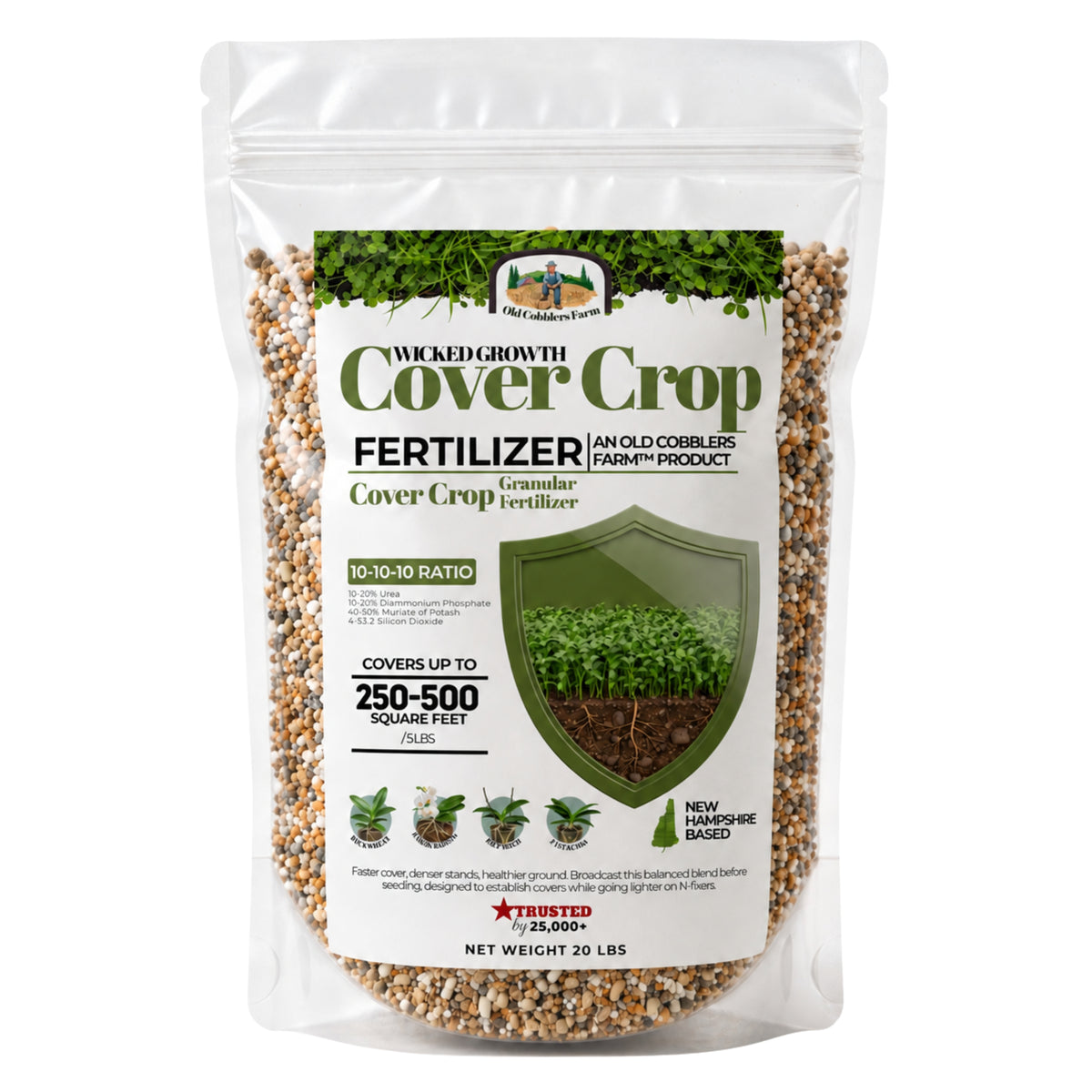
1. Measure the rate for your area (a 5 lb bag covers 250–500 sq ft at the broadcast rate).
2. Broadcast evenly over the plot before seeding, then lightly rake into the topsoil.
3. Seed your cover crop as usual.
4. Water thoroughly after application to dissolve the granules and move nutrients into the seedbed.
5. For long-season covers, apply once more mid-cycle (1 lb per 100 sq ft) when plants are 3–4 inches tall.
When and how often: at planting, plus one mid-cycle feeding for long-season covers. Short-season covers like buckwheat usually need only the at-planting application.
What NOT to do: do not overfeed nitrogen-fixing blends, do not exceed the broadcast rates, and do not skip the watering-in step.
-Established stands: side-dress or top-dress 1 lb per 100 sq ft once plants are 3–4 inches tall
-Nitrogen-fixing covers (clover, vetch, field peas, alfalfa mixes): use the lower end of the rates — they supply their own nitrogen, and overfeeding reduces that benefit
Steps:
1. Measure the rate for your area (a 5 lb bag covers 250–500 sq ft at the broadcast rate).
2. Broadcast evenly over the plot before seeding, then lightly rake into the topsoil.
3. Seed your cover crop as usual.
4. Water thoroughly after application to dissolve the granules and move nutrients into the seedbed.
5. For long-season covers, apply once more mid-cycle (1 lb per 100 sq ft) when plants are 3–4 inches tall.
When and how often: at planting, plus one mid-cycle feeding for long-season covers. Short-season covers like buckwheat usually need only the at-planting application.
What NOT to do: do not overfeed nitrogen-fixing blends, do not exceed the broadcast rates, and do not skip the watering-in step.
