


How to Apply
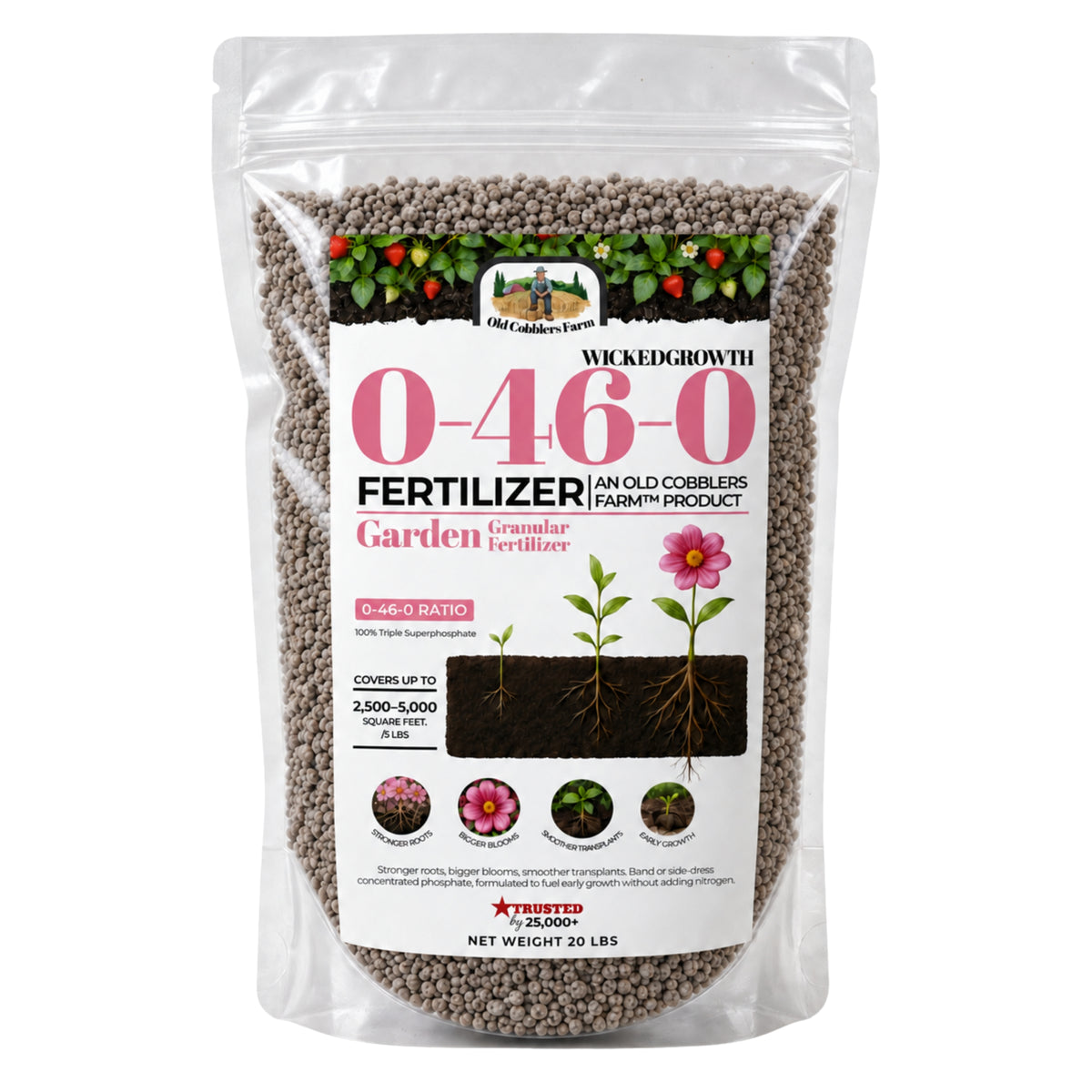
Application Rate: 1–2 lbs per 1,000 sq ft — the standard rate for triple superphosphate. One 5 lb bag covers 2,500–5,000 sq ft.
1. Test first (recommended): A soil test confirms phosphorus deficiency so you apply only what’s needed.
2. Band or side-dress for best efficiency: Phosphorus doesn’t move far in soil, so place granules near the root zone — in a band beside rows, in the planting hole for transplants (mixed with soil, not touching roots), or side-dressed around established plants.
3. Work into the soil: Lightly incorporate granules into the top 2–4 inches of soil where roots can reach them.
4. Water thoroughly: Always water in after application to activate the granules.
Best timing: At planting or transplanting for root establishment; before and during bud formation for flowers, fruits, and vegetables; fall for bulbs and perennials.
Lawn use: Apply to turf only where a soil test shows phosphorus deficiency — some states restrict phosphorus applications on lawns, so check local regulations first.
1. Test first (recommended): A soil test confirms phosphorus deficiency so you apply only what’s needed.
2. Band or side-dress for best efficiency: Phosphorus doesn’t move far in soil, so place granules near the root zone — in a band beside rows, in the planting hole for transplants (mixed with soil, not touching roots), or side-dressed around established plants.
3. Work into the soil: Lightly incorporate granules into the top 2–4 inches of soil where roots can reach them.
4. Water thoroughly: Always water in after application to activate the granules.
Best timing: At planting or transplanting for root establishment; before and during bud formation for flowers, fruits, and vegetables; fall for bulbs and perennials.
Lawn use: Apply to turf only where a soil test shows phosphorus deficiency — some states restrict phosphorus applications on lawns, so check local regulations first.
