



How to Apply
Conditions & Planting Window
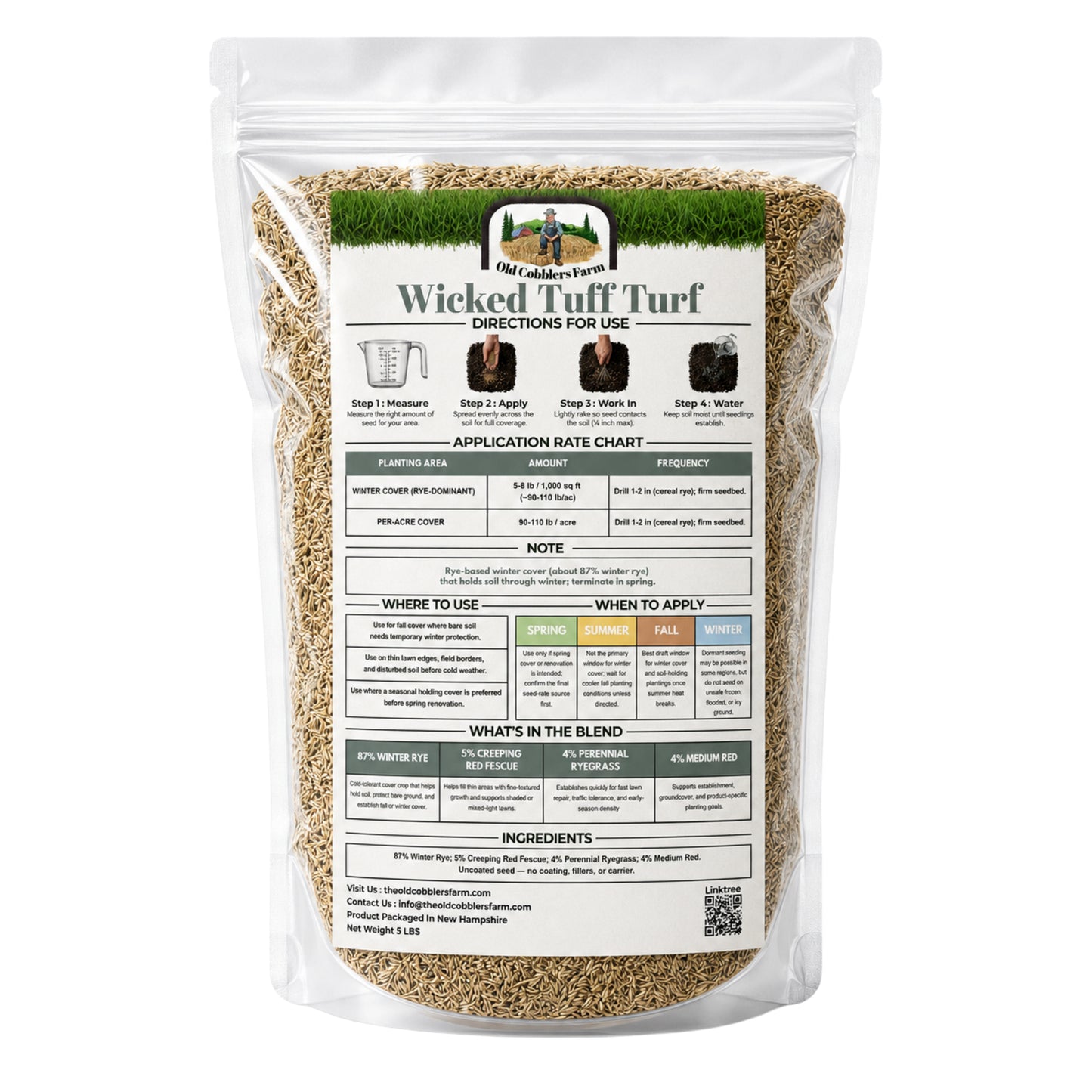
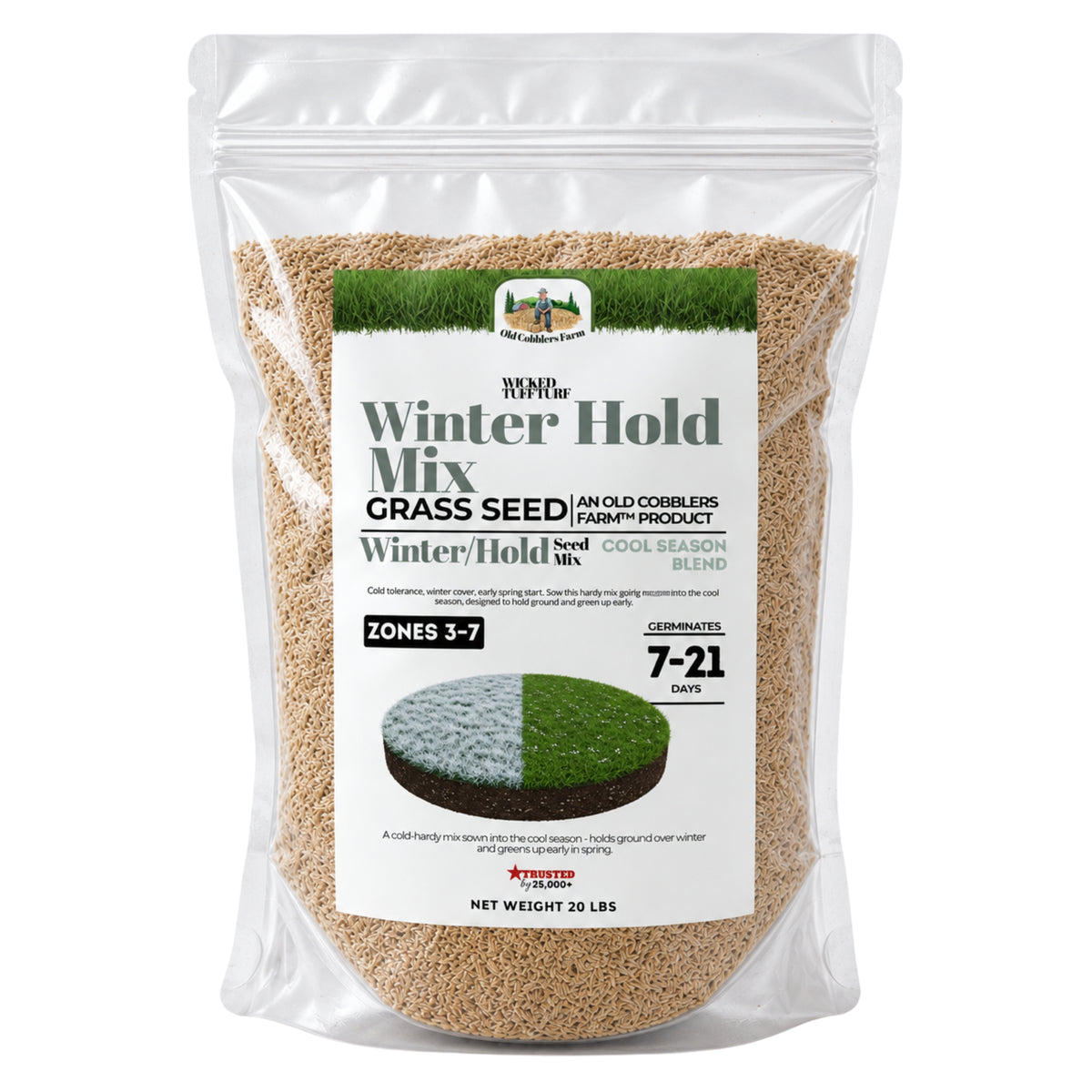
-USDA Zones: 3–7
-Primary window: late October through December (after the turfgrass seeding window closes)
-Dormant seeding: December through February (seed lies dormant, germinates in early spring)
-Germinates at soil temperatures as low as 34°F; soil pH 5.5–7.0 (highly adaptable; moderate drainage)
Seeding Rate (per 1,000 sq ft and per acre)
-New seeding: 4–6 lb per 1,000 sq ft (≈ 175–260 lb per acre)
-Overseeding: 3–4 lb per 1,000 sq ft (≈ 130–175 lb per acre)
How to Plant & Mow Through the Transition
Rake the seed lightly into the top of the soil for good seed-to-soil contact and water until established. Winter rye emerges in 5–10 days even in cold conditions; perennial ryegrass follows in 10–21 days if soil is above 50°F; creeping red fescue and red clover establish as the soil warms in spring. Mowing through the transition: mow the winter rye to 3–4 inches once it reaches 5–6 inches; when it begins heading in late spring, mow short (2–3 inches) to reduce its competition with the permanent species; after the transition, return to a normal 3–3.5 inch height. Winter rye has low fertility needs — apply a starter fertilizer in early spring as the permanent species establish; the red clover fixes nitrogen, easing spring fertilizer needs.
Clover Inoculation (optional)
The red clover is uncoated and not pre-inoculated. The Rhizobium bacteria clover needs to fix nitrogen are usually present in established soils, but on poor or freshly disturbed ground a clover/Rhizobium (R. trifolii) inoculant at seeding helps reliable nodulation.
-USDA Zones: 3–7
-Primary window: late October through December (after the turfgrass seeding window closes)
-Dormant seeding: December through February (seed lies dormant, germinates in early spring)
-Germinates at soil temperatures as low as 34°F; soil pH 5.5–7.0 (highly adaptable; moderate drainage)
Seeding Rate (per 1,000 sq ft and per acre)
-New seeding: 4–6 lb per 1,000 sq ft (≈ 175–260 lb per acre)
-Overseeding: 3–4 lb per 1,000 sq ft (≈ 130–175 lb per acre)
How to Plant & Mow Through the Transition
Rake the seed lightly into the top of the soil for good seed-to-soil contact and water until established. Winter rye emerges in 5–10 days even in cold conditions; perennial ryegrass follows in 10–21 days if soil is above 50°F; creeping red fescue and red clover establish as the soil warms in spring. Mowing through the transition: mow the winter rye to 3–4 inches once it reaches 5–6 inches; when it begins heading in late spring, mow short (2–3 inches) to reduce its competition with the permanent species; after the transition, return to a normal 3–3.5 inch height. Winter rye has low fertility needs — apply a starter fertilizer in early spring as the permanent species establish; the red clover fixes nitrogen, easing spring fertilizer needs.
Clover Inoculation (optional)
The red clover is uncoated and not pre-inoculated. The Rhizobium bacteria clover needs to fix nitrogen are usually present in established soils, but on poor or freshly disturbed ground a clover/Rhizobium (R. trifolii) inoculant at seeding helps reliable nodulation.
