




How to Apply
Conditions
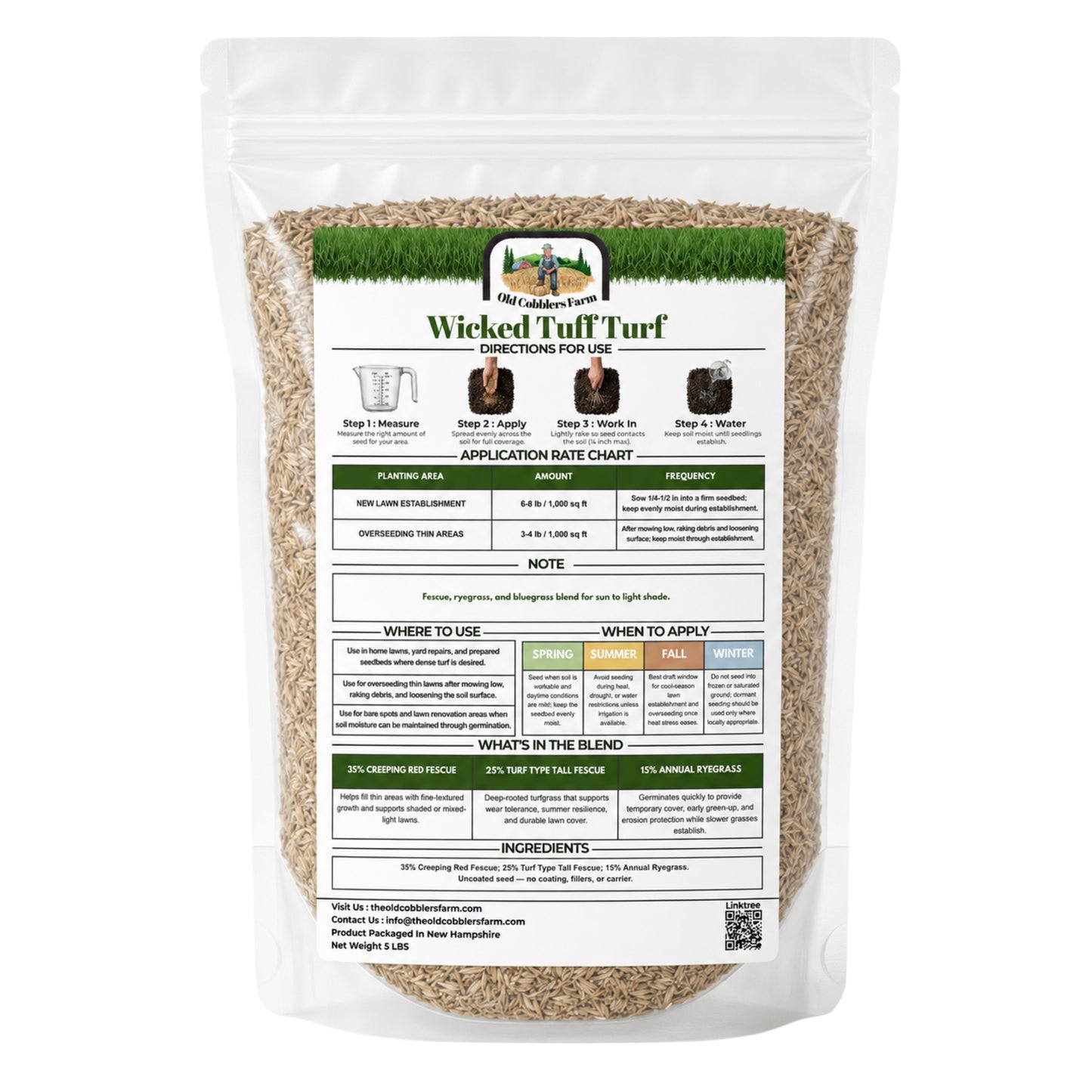
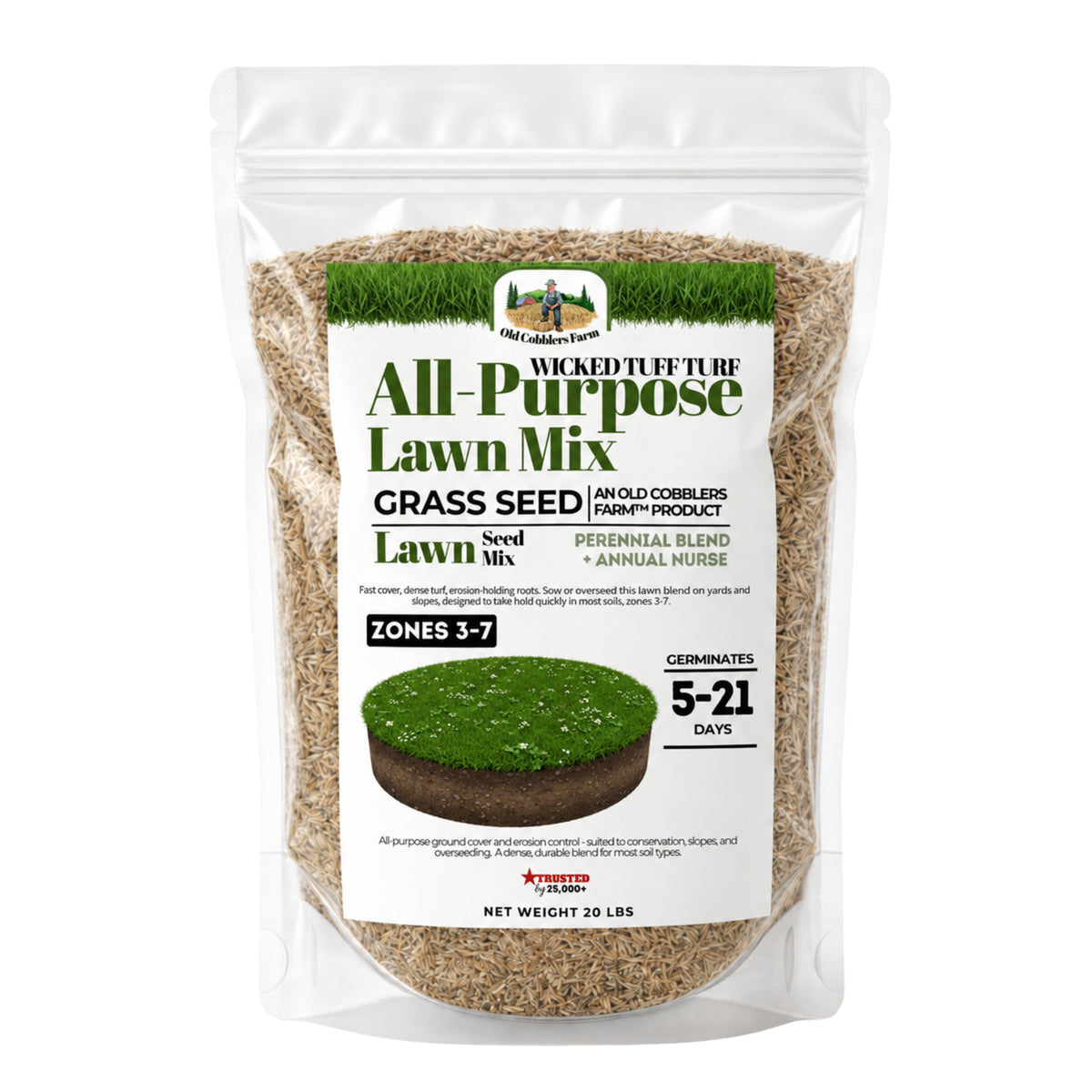
-USDA Zones: 3–7 (northern cool-season; winter-hardy to -30°F)
-Sun: 4–6 hours ideal; 3 hours minimum (creeping red fescue carries the shadier spots)
-Soil pH: 6.0–7.0; clay, loam, or sandy; moderate drainage (not for waterlogged sites)
Seeding Rate (per 1,000 sq ft and per acre)
-New lawns: 6–8 lb per 1,000 sq ft (≈ 260–350 lb per acre)
-Overseeding: 3–4 lb per 1,000 sq ft (≈ 130–175 lb per acre)
How to Plant
Rake the seed lightly into the top of the soil for good seed-to-soil contact — do not bury it deep — and keep the surface consistently moist while it germinates and fills in (annual rye in 5–7 days, bluegrass slowest at 21–28 days). First mow when the grass reaches 4–4.5 inches, removing no more than one-third of the blade; then maintain at 3.0–3.5 inches (2.5 inches minimum). The lawn gives its best response to fall fertilization (about 2–3 lb nitrogen per 1,000 sq ft annually, less the clover’s contribution).
Inoculation (clover component)
White clover is a legume and fixes nitrogen with the help of Rhizobium trifolii bacteria — “inoculation” means coating the seed with the right helper bacteria so it fixes nitrogen well. This mix is uncoated (not pre-inoculated), and for a 3% clover component inoculation is generally optional — clover typically nodulates with rhizobia already present in established soil.
-USDA Zones: 3–7 (northern cool-season; winter-hardy to -30°F)
-Sun: 4–6 hours ideal; 3 hours minimum (creeping red fescue carries the shadier spots)
-Soil pH: 6.0–7.0; clay, loam, or sandy; moderate drainage (not for waterlogged sites)
Seeding Rate (per 1,000 sq ft and per acre)
-New lawns: 6–8 lb per 1,000 sq ft (≈ 260–350 lb per acre)
-Overseeding: 3–4 lb per 1,000 sq ft (≈ 130–175 lb per acre)
How to Plant
Rake the seed lightly into the top of the soil for good seed-to-soil contact — do not bury it deep — and keep the surface consistently moist while it germinates and fills in (annual rye in 5–7 days, bluegrass slowest at 21–28 days). First mow when the grass reaches 4–4.5 inches, removing no more than one-third of the blade; then maintain at 3.0–3.5 inches (2.5 inches minimum). The lawn gives its best response to fall fertilization (about 2–3 lb nitrogen per 1,000 sq ft annually, less the clover’s contribution).
Inoculation (clover component)
White clover is a legume and fixes nitrogen with the help of Rhizobium trifolii bacteria — “inoculation” means coating the seed with the right helper bacteria so it fixes nitrogen well. This mix is uncoated (not pre-inoculated), and for a 3% clover component inoculation is generally optional — clover typically nodulates with rhizobia already present in established soil.
