




How to Apply
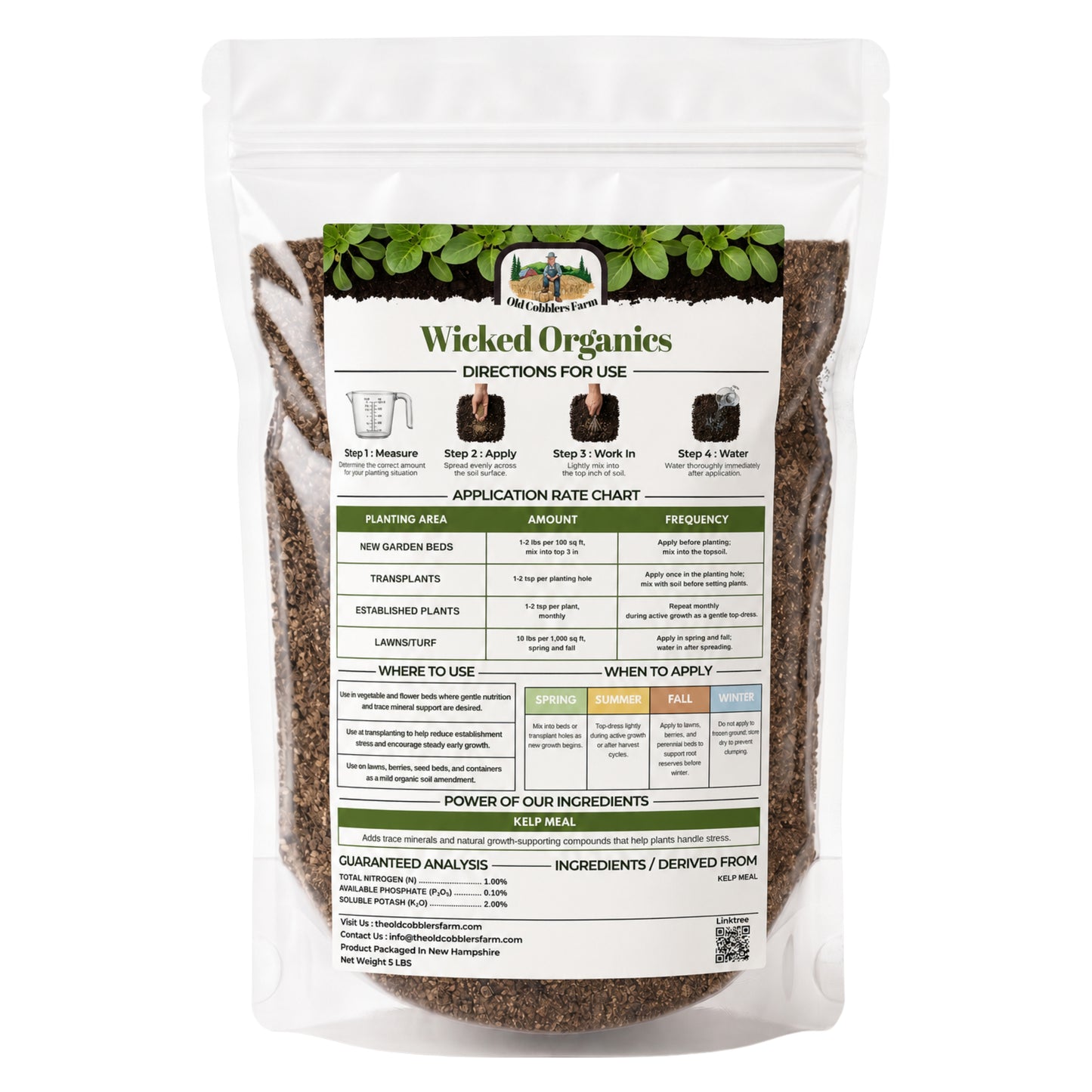
-New garden beds: 1–2 lbs per 100 sq ft, mixed into the top 3 inches
-Small beds: ¼ cup per sq ft, mixed into the top 3 inches
-Transplants: 1–2 teaspoons per planting hole
-Established plants: 1–2 teaspoons per plant, monthly
-Trees: 1 lb per inch of trunk diameter; berries: 1 lb per 100 sq ft around planting
-Lawns/turf: about 10 lbs per 1,000 sq ft, spring and fall
-Containers: 1–2 tablespoons per gallon (about 2.5 lbs per cubic yard); seed beds: 1 lb per 100 sq ft
Steps:
1. Mix into the top few inches of bed or potting soil, into the planting hole, or top-dress and lightly incorporate around established plants.
2. Water in after applying; because it's non-burning you can place it right at the root zone.
3. Optionally, steep in water to make a liquid kelp extract for foliar feeding or transplant watering.
4. Apply 1–2 times per season, or monthly for heavy feeders and during stress periods.
When and how often: at planting/transplanting and 1–2 times per season (monthly for heavy feeders or during heat/drought stress).
What NOT to do: don't expect it to replace an N-P-K fertilizer (it's a conditioner/supplement — pair it with a feed for macronutrients), and don't over-think the dose; it won't burn.
-Small beds: ¼ cup per sq ft, mixed into the top 3 inches
-Transplants: 1–2 teaspoons per planting hole
-Established plants: 1–2 teaspoons per plant, monthly
-Trees: 1 lb per inch of trunk diameter; berries: 1 lb per 100 sq ft around planting
-Lawns/turf: about 10 lbs per 1,000 sq ft, spring and fall
-Containers: 1–2 tablespoons per gallon (about 2.5 lbs per cubic yard); seed beds: 1 lb per 100 sq ft
Steps:
1. Mix into the top few inches of bed or potting soil, into the planting hole, or top-dress and lightly incorporate around established plants.
2. Water in after applying; because it's non-burning you can place it right at the root zone.
3. Optionally, steep in water to make a liquid kelp extract for foliar feeding or transplant watering.
4. Apply 1–2 times per season, or monthly for heavy feeders and during stress periods.
When and how often: at planting/transplanting and 1–2 times per season (monthly for heavy feeders or during heat/drought stress).
What NOT to do: don't expect it to replace an N-P-K fertilizer (it's a conditioner/supplement — pair it with a feed for macronutrients), and don't over-think the dose; it won't burn.
