


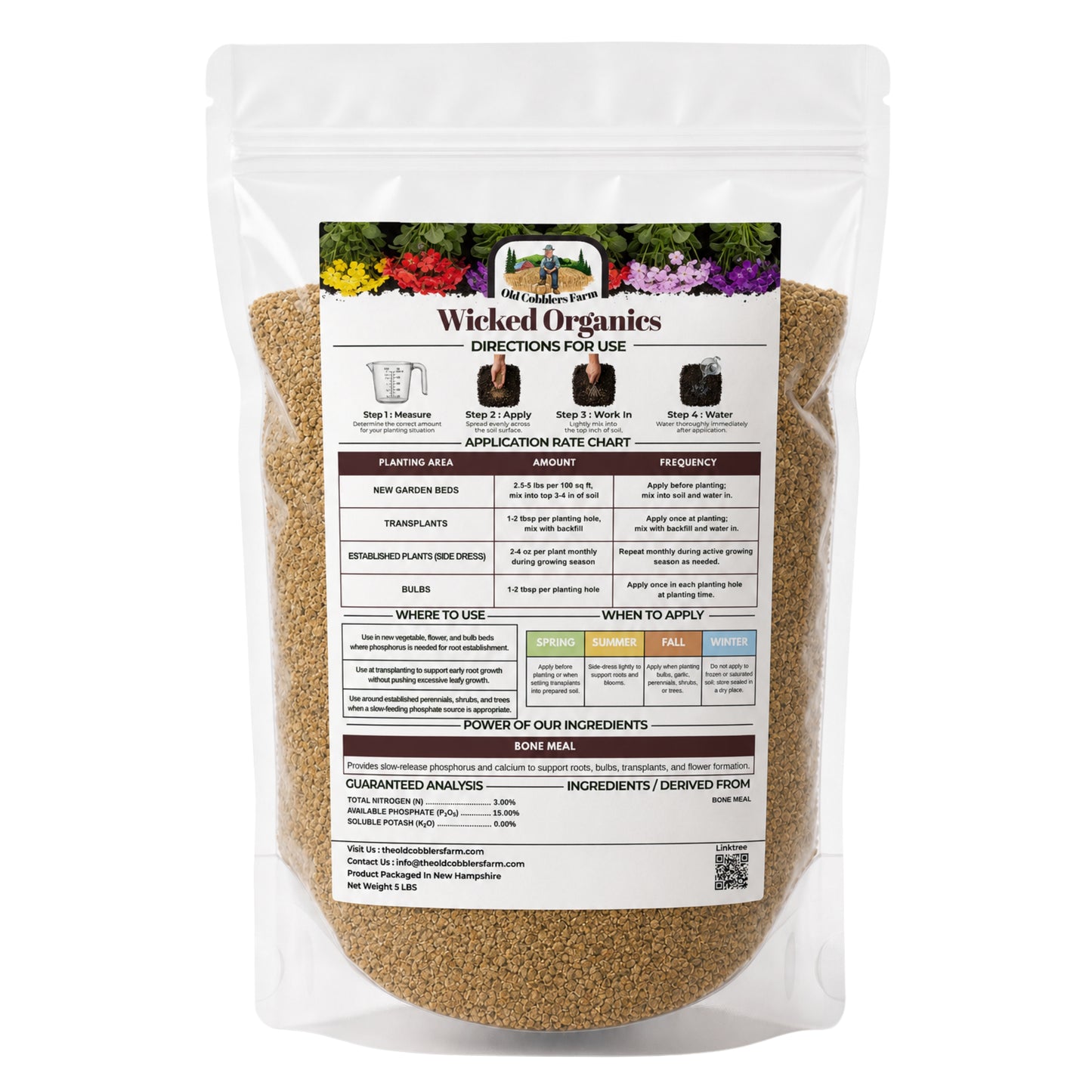



How to Apply
-New garden beds: 2.5–5 lbs per 100 sq ft, mixed into the top 3–4 inches of soil
-Transplants: 1–2 tablespoons per planting hole, mixed with the backfill
-Established plants (side-dress): 2–4 oz per plant monthly during the growing season
-Trees and shrubs: 1 lb per 2 inches of trunk diameter, spread to the drip line
-New trees at transplant: 1–2 cups mixed with the backfill soil
-Bulbs: 1–2 tablespoons per planting hole
-Lawns: 5–10 lbs per 1,000 sq ft (soil test recommended)
-Containers: 1 tablespoon per gallon of potting mix
Steps:
1. Soil test first — phosphatic fertilizers should always be applied according to a soil test to prevent phosphorus buildup.
2. For planting holes (bulbs, transplants, trees), mix the measured amount with the backfill so it sits in the future root zone — never as a concentrated layer directly under roots or bulbs.
3. For beds and side-dressing, work into the soil surface rather than leaving it on top.
4. Water thoroughly after application.
When: at planting and bed preparation for the main use; monthly side-dressing in season for established plants. The slow release means one well-placed application works for months.
What NOT to do: do not apply without a soil test on soils that may already be high in phosphorus, do not leave it sitting on the surface where pets can reach it, and do not exceed the rates.
-Transplants: 1–2 tablespoons per planting hole, mixed with the backfill
-Established plants (side-dress): 2–4 oz per plant monthly during the growing season
-Trees and shrubs: 1 lb per 2 inches of trunk diameter, spread to the drip line
-New trees at transplant: 1–2 cups mixed with the backfill soil
-Bulbs: 1–2 tablespoons per planting hole
-Lawns: 5–10 lbs per 1,000 sq ft (soil test recommended)
-Containers: 1 tablespoon per gallon of potting mix
Steps:
1. Soil test first — phosphatic fertilizers should always be applied according to a soil test to prevent phosphorus buildup.
2. For planting holes (bulbs, transplants, trees), mix the measured amount with the backfill so it sits in the future root zone — never as a concentrated layer directly under roots or bulbs.
3. For beds and side-dressing, work into the soil surface rather than leaving it on top.
4. Water thoroughly after application.
When: at planting and bed preparation for the main use; monthly side-dressing in season for established plants. The slow release means one well-placed application works for months.
What NOT to do: do not apply without a soil test on soils that may already be high in phosphorus, do not leave it sitting on the surface where pets can reach it, and do not exceed the rates.
