

How to Apply
Timing: sap runs when daytime temperatures climb above freezing and nights drop back below it. That swing is what moves sap, not warmth alone — a run of mild nights will slow or stop the flow.
– Choose the tree. General sugaring guidance is to tap only healthy trees of at least 10–12 inches in trunk diameter, one tap per tree at that size. Sugar maples are the classic choice; red maples work, and 5/16 in. spouts are also used on birch and black walnut.
– Drill the hole. Use the matching bit for a 5/16 in. spout, on the sunny side of the trunk at a comfortable working height, angled very slightly upward so sap runs out rather than pooling. General practice is 1.5–2 inches deep into the wood.
– Clear the shavings. Pull the bit out slowly and clear loose shavings from the hole so nothing blocks the flow.
– Set the spout. Seat it in the hole and tap it home with gentle blows from a mallet or the flat of a hammer. Snug, not driven — over-driving can split the wood around the hole.
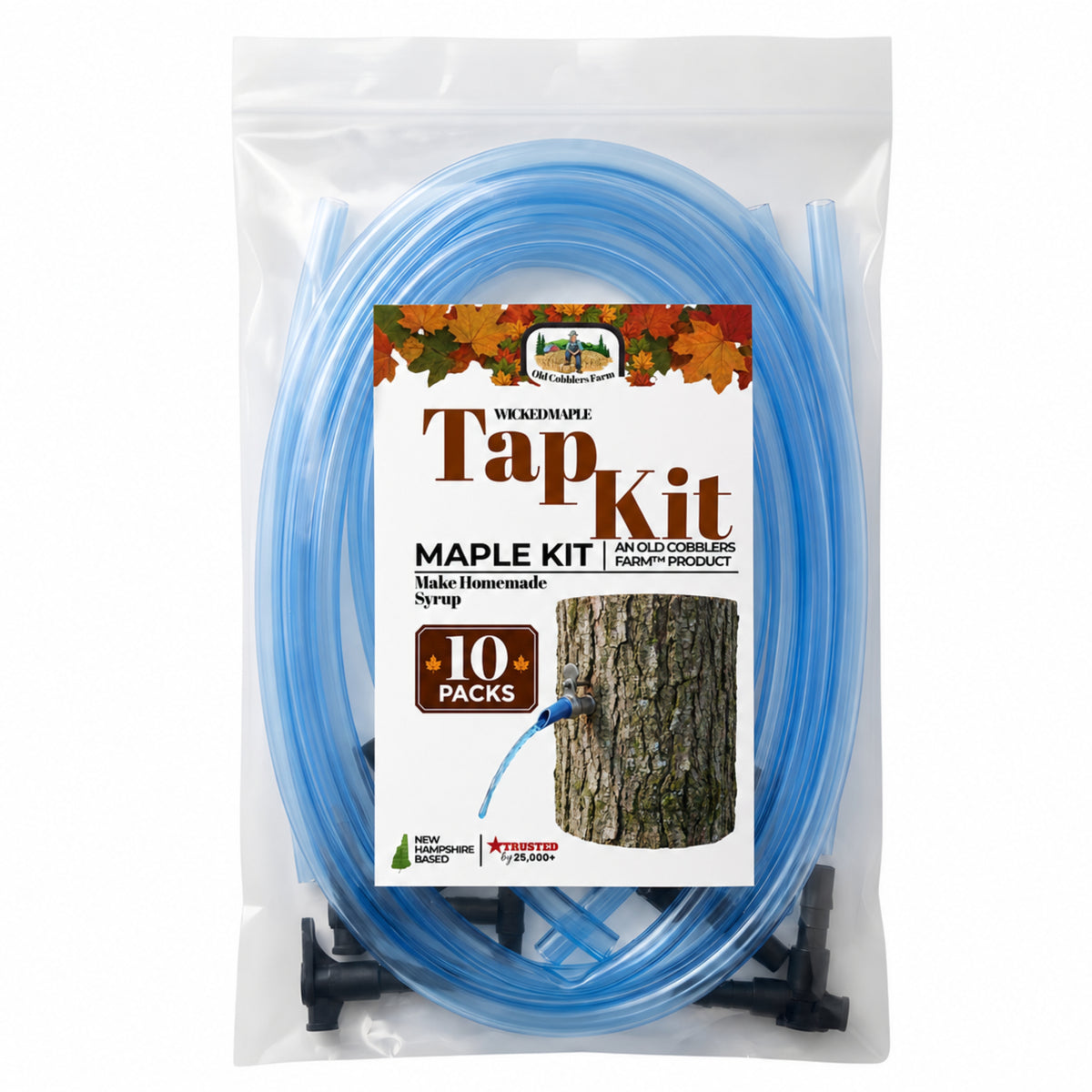
– Connect the drop line. Push the tubing fully onto the spout barb and run the other end into your covered collection container, keeping a continuous downhill fall the whole way.
– Collect often. Gather sap frequently through the run and keep it cold until you boil. Sap is a food product from the moment it leaves the tree.
– End of season. When buds break, the run is over and the sap turns. Pull the spouts, rinse everything with clean water, dry thoroughly, and store out of direct sunlight. Leave the tap holes alone — they close on their own.
– Choose the tree. General sugaring guidance is to tap only healthy trees of at least 10–12 inches in trunk diameter, one tap per tree at that size. Sugar maples are the classic choice; red maples work, and 5/16 in. spouts are also used on birch and black walnut.
– Drill the hole. Use the matching bit for a 5/16 in. spout, on the sunny side of the trunk at a comfortable working height, angled very slightly upward so sap runs out rather than pooling. General practice is 1.5–2 inches deep into the wood.
– Clear the shavings. Pull the bit out slowly and clear loose shavings from the hole so nothing blocks the flow.
– Set the spout. Seat it in the hole and tap it home with gentle blows from a mallet or the flat of a hammer. Snug, not driven — over-driving can split the wood around the hole.
– Connect the drop line. Push the tubing fully onto the spout barb and run the other end into your covered collection container, keeping a continuous downhill fall the whole way.
– Collect often. Gather sap frequently through the run and keep it cold until you boil. Sap is a food product from the moment it leaves the tree.
– End of season. When buds break, the run is over and the sap turns. Pull the spouts, rinse everything with clean water, dry thoroughly, and store out of direct sunlight. Leave the tap holes alone — they close on their own.
