
Aluminum Sulfate - Acid Fertilizer
Couldn't load pickup availability
Product Description
Product Description
Fast-Acting Soil Acidifier — Lower pH and Turn Hydrangeas Blue
Old Cobblers Farm Aluminum Sulfate is a soil amendment used to lower soil pH — not a fertilizer, but a fast-acting acidifier for acid-loving plants and alkaline soils. Its best-known job is turning hydrangeas blue: it both lowers pH and supplies aluminum, which hydrangeas take up to produce blue blooms. It is also used to create more acidic conditions for azaleas, rhododendrons and blueberries.
Unlike elemental sulfur, which works slowly, aluminum sulfate acts quickly — which is convenient, but also means it is easy to over-acidify. Always test your soil pH first, start with a conservative rate, water in after applying, and re-test before applying again. Used carefully, it is an effective tool for fine-tuning pH around the plants that prefer it acidic.
An important caution: because it works through aluminum, repeated or heavy use can build up aluminum in the soil to levels that harm plants. For general, long-term acidification, elemental sulfur is often the gentler choice; aluminum sulfate is best kept for quick pH adjustment and for blue hydrangeas. Use it sparingly on food crops, and keep it out of ponds, streams and storm drains.
Where to use it: blue hydrangeas and acid-loving ornamentals (azaleas, rhododendrons), and for quick, soil-test-guided pH adjustment in beds and lawns — used sparingly and with care.
Key Benefits
• Lowers Soil pH Fast: A fast-acting acidifier for acid-loving plants and alkaline soils.
• Turns Hydrangeas Blue: Lowers pH and supplies aluminum — the combination hydrangeas use for blue blooms.
• For Acid-Loving Ornamentals: Helps create acidic conditions for azaleas and rhododendrons.
• Improves Some Nutrient Availability: Lowering pH can make nutrients like iron more available to acid-loving plants.
• Quick Adjustment: Useful when you need to shift pH faster than slow-release elemental sulfur.
• Soil-Test Guided: Designed to be used with a soil test for precise, careful pH adjustment.
• Single Ingredient: 100% aluminum sulfate — a straightforward pH-adjusting amendment.
Best Uses
• Blue hydrangeas (lower pH + aluminum for blue color)
• Acid-loving ornamentals (azaleas, rhododendrons)
• Quick, soil-test-guided pH adjustment
• Spot-correcting overly alkaline soil
• Container and bed plants needing lower pH
• Gardeners managing pH precisely with a meter or test
Important Notes / Safety
• Always Soil-Test First: Test pH before applying and re-test before reapplying — this is the single most important step with a fast-acting acidifier.
• Don’t Over-Apply: Because it acts fast, it is easy to over-acidify. Start conservative and adjust gradually rather than applying heavily.
• Aluminum Can Build Up: Repeated or heavy use raises soil aluminum, which can become toxic to plants. For general, long-term acidifying, elemental sulfur is often the gentler choice.
• Not a Fertilizer: It has no nitrogen, phosphorus or potassium — it adjusts pH. Pair with a fertilizer for feeding.
• Use Sparingly on Food Crops: Be cautious on vegetables and other edibles — soil-test, use lightly, and avoid repeated heavy applications.
• Handle & Store Safely: May irritate skin and eyes — wear gloves, avoid dust, wash hands, and keep away from children and pets. Keep it out of ponds, streams and storm drains. Store cool, dry and sealed.
Why Choose Old Cobblers Farm™?
Aluminum sulfate is the fast, precise way to lower soil pH — and the classic choice for blue hydrangeas, which use its aluminum for color. We give it to you straight: it works quickly, so soil-test first and apply sparingly, and remember that elemental sulfur is gentler for general long-term acidifying. Used with care, it is a useful tool for the plants that like it acidic.
Application Instructions
-Hydrangeas (blue): 1 tablespoon per gallon of water; soak the soil around the plant
-Lawns: 5 lbs per 1,000 sq ft, then water thoroughly
-Vegetable gardens: 1–2 lbs per 100 sq ft — soil-test first and use cautiously on food crops
-Always: test soil pH before applying to avoid over-acidifying, and re-test before any repeat application
Step by step
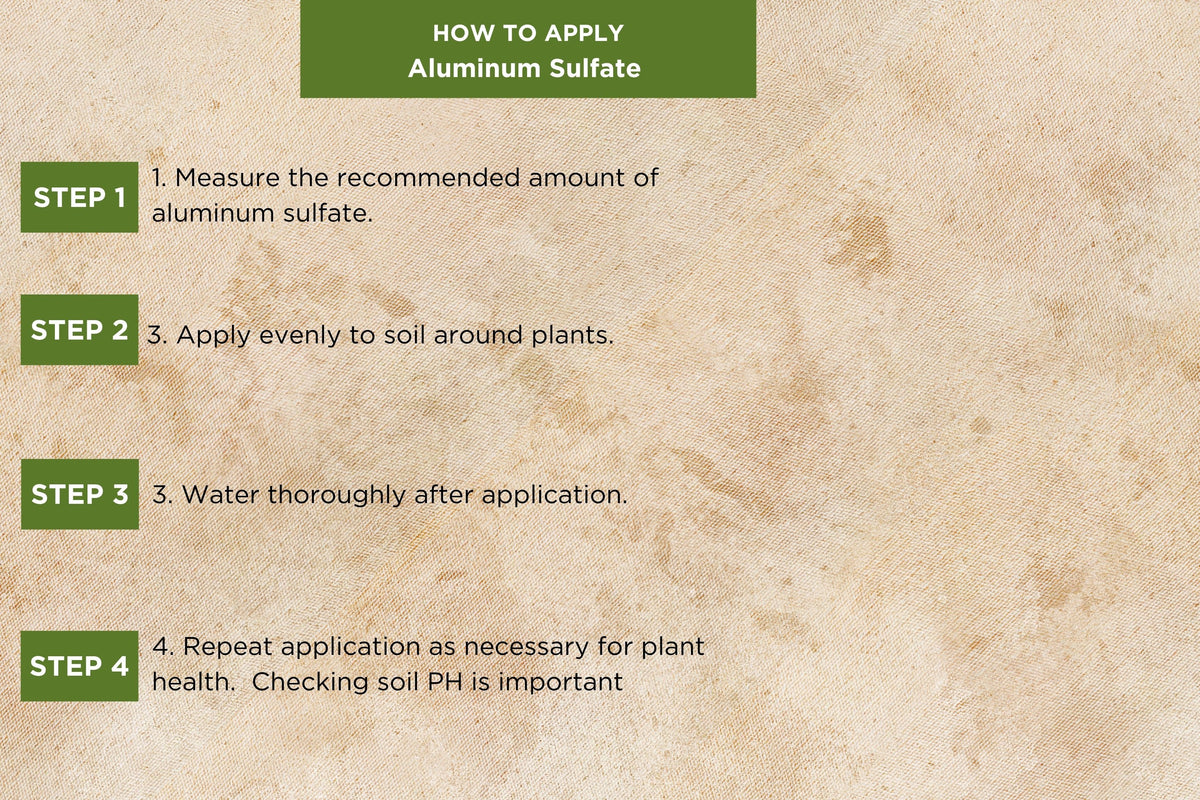
1. Test your soil pH first — always — to set the right rate and avoid over-acidifying.
2. Choose the rate for your use (see the rate table) and start conservative.
3. Apply around the root zone, or spread evenly for lawns/beds.
4. Water in thoroughly after applying.
5. Re-test the soil before reapplying — don’t apply repeatedly without checking, to avoid aluminum buildup.
6. For general, long-term acidifying, consider elemental sulfur as a gentler alternative.
What not to do
Do not skip the soil test, do not over-apply or reapply without re-testing (aluminum can build up and harm plants), do not use heavily or repeatedly on food crops, and do not let it wash into ponds, streams or storm drains.
Ingredients
Ingredients
No N-P-K — This is a soil amendment, not a fertilizer — it adjusts pH rather than feeding plants.
Product Specifications
-Category: soil amendment — not a fertilizer (no NPK)
-Action: fast-acting pH reduction
-Key use: lowering soil pH + blue hydrangeas
-Best for: acid-loving ornamentals; precise pH adjustment
-Caution: aluminum can build up — soil-test, don’t over-apply
-Gentler alternative: elemental sulfur for general long-term acidifying
-Form: granular / crystalline
Share

How to Apply
-Hydrangeas (blue): 1 tablespoon per gallon of water; soak the soil around the plant
-Lawns: 5 lbs per 1,000 sq ft, then water thoroughly
-Vegetable gardens: 1–2 lbs per 100 sq ft — soil-test first and use cautiously on food crops
-Always: test soil pH before applying to avoid over-acidifying, and re-test before any repeat application
Step by step
1. Test your soil pH first — always — to set the right rate and avoid over-acidifying.
2. Choose the rate for your use (see the rate table) and start conservative.
3. Apply around the root zone, or spread evenly for lawns/beds.
4. Water in thoroughly after applying.
5. Re-test the soil before reapplying — don’t apply repeatedly without checking, to avoid aluminum buildup.
6. For general, long-term acidifying, consider elemental sulfur as a gentler alternative.
What not to do
Do not skip the soil test, do not over-apply or reapply without re-testing (aluminum can build up and harm plants), do not use heavily or repeatedly on food crops, and do not let it wash into ponds, streams or storm drains.
