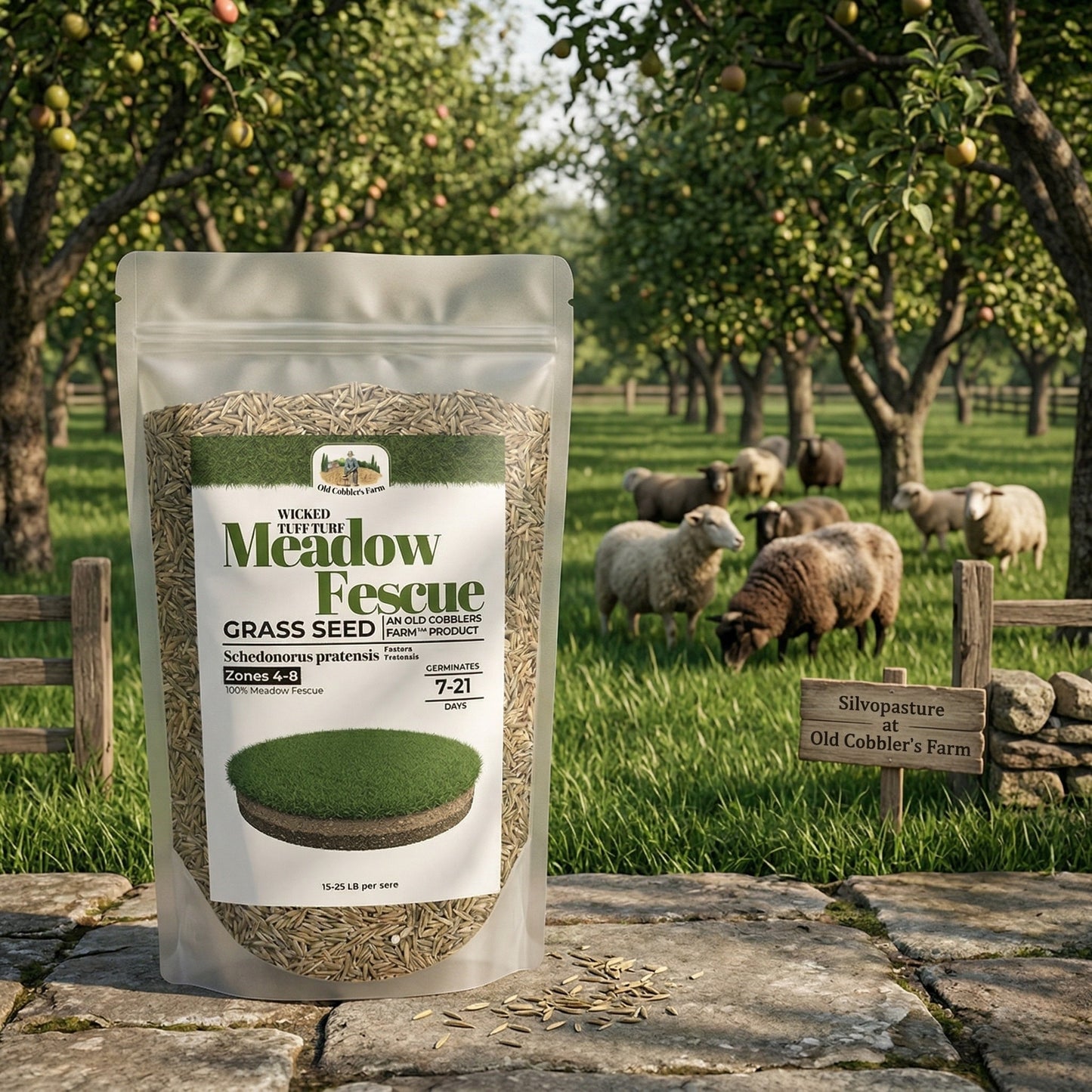
Wicked Tuff Turf Meadow Fescue Seed
Wicked Tuff Turf Meadow Fescue Seed
Couldn't load pickup availability
Product Description
Product Description
A naturally endophyte-free forage grass that’s among the most palatable and digestible you can plant — the safe, high-intake alternative to toxic tall fescue.
Meadow Fescue (Festuca pratensis, syn. Schedonorus pratensis) is a cool-season perennial — it grows in the cooler parts of the year and a stand lasts 5–10+ years. It is a bunch-type grass with some short rhizomes and medium-textured leaves. Older US references sometimes call it “English Bluegrass,” which is misleading — it is a fescue, not a bluegrass. Two things make it stand out for livestock. First, it is exceptionally palatable and digestible, driving higher voluntary intake and better animal performance than tall fescue or orchardgrass. Second, it is naturally endophyte-free, so it carries none of the fescue-toxicosis risk of toxic-endophyte tall fescue. Its deep roots give good drought tolerance and excellent winter survival, and it handles wet soils better than tall fescue. Our seed is uncoated and tested for purity and germination.
Key Benefits
• Endophyte-free safety: no fescue-toxicosis risk for cattle, sheep, or goats.
• Exceptional palatability: highly digestible — drives higher voluntary intake.
• Outstanding winter hardiness: a rugged perennial for Zones 3–6.
• Extended forage quality: holds value and green growth later into the season.
• Drought & wet tolerant: deep roots for dry spells; handles wet better than tall fescue.
• Clean, uncoated seed: no fillers, coatings, or dyes.
Best Uses
• Dairy and beef pasture systems
• Hay and silage production
• Northern forage mixes (with alfalfa, clover, timothy)
• Overseeding existing pastures
• Conservation and waterway plantings
Important Notes
Meadow fescue is grown as a forage and pasture grass. It tolerates moderate foot traffic and can be a minor component in some blends, but it is not a primary turf/lawn species — choose a turf grass for a manicured lawn. Establishment is moderate in speed, reaching full density by the second season, so keep weeds down early. For the best feed quality, cut at the boot to early head stage — quality drops as it matures.
Why Choose Old Cobblers Farm™?
Every bag of Wicked Tuff Turf seed is selected for high purity and strong germination, and tested so you know what you are planting — consistent, clean, uncoated seed for livestock producers who demand the best forage quality.
Application Instructions
Application Instructions
USDA Zones 3–6; full sun to light shade; loam, clay loam, or silt loam; pH 5.5–7.0; well-drained to moderately moist (tolerates wet better than tall fescue).
Seeding Rate
20–25 lb per acre for a pure stand; 8–15 lb per acre in a mix with legumes or other forage grasses.
How to Plant
Drill or broadcast ¼–½ inch deep onto a prepared seedbed with firm seed-to-soil contact. Plant late summer/early fall (preferred) or early spring. Keep moist through the 10–14 day germination (soil 50–65°F); establishment is moderate, reaching full density by the second season.
Cutting & Grazing
Cut at the boot to early head stage for the highest quality — value drops as it matures. Use rotational grazing and leave a 3–4 inch stubble for stand longevity; wait until the stand is fully established before grazing.
Ingredients
Ingredients
Product Specifications
Product Specifications
Species: Meadow Fescue (Festuca pratensis, syn. Schedonorus pratensis)
Also known as: English Bluegrass (older US name — it is a fescue, not a bluegrass)
Category: Cool-season perennial forage/pasture grass
Lifecycle: Perennial (5–10+ year stand life)
Growth habit: Bunch-type with some short rhizomes; medium-textured
Endophyte status: Naturally endophyte-free
USDA Zones: 3–6
Sun: Full sun to light shade
Soil pH: 5.5–7.0
Soil / drainage: Loam, clay loam, silt loam; well-drained to moderately moist; tolerates wet better than tall fescue
Seeding & care
Rate — pure stand: 20–25 lb/acre
Rate — in mix: 8–15 lb/acre
Depth: ¼–½ inch
Best planting time: Late summer/early fall (preferred) or early spring
Germination window: 10–14 days (soil 50–65°F)
Establishment: Moderate; full density by the second season
Cutting: Boot to early head stage for highest quality
Foot traffic: Moderate — not a primary turf species
Fertility note: Seed only — not a fertilizer; responds to nitrogen
Seed quality
Purity: 95–98%
Germination: 85–90%
Weed seed: <0.5%
Other crop seed: ≤0.5%
Inert matter: 2–4%
Share